


I ran into Career-Ops while browsing GitHub for job search automation tools, and what caught my attention was its sheer scope. This isn’t just another resume parser, it’s a full command center that turns Claude Code into a systematic job‑search pipeline. Built by santifer, Career-Ops scans career pages across 45+ tech companies (including Stripe, Anthropic, and OpenAI), finds matching roles, rewrites your CV with 14 skill‑matching modes, and generates ATS‑optimized PDFs via Playwright—all while giving you a terminal dashboard to monitor batch processing in real time.
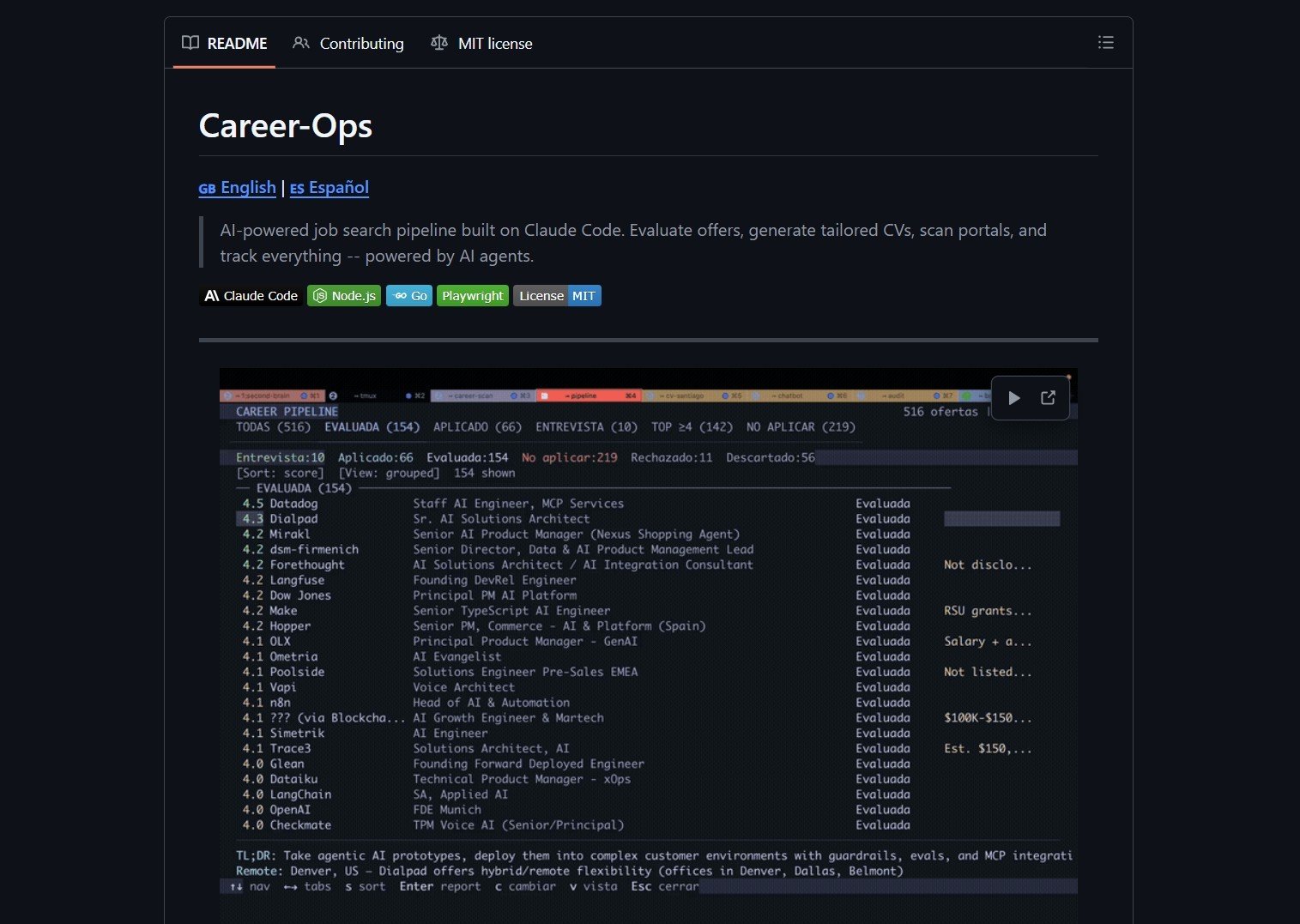 Career-Ops GitHub repository homepage
What Is Career-Ops?
Career-Ops is an open‑source system designed for serious, technical job seekers who want to automate and scale their entire application workflow. Instead of manually tracking applications in a spreadsheet, you get an AI‑powered pipeline that:
- Evaluates offers with a structured A‑F scoring system across 10 weighted dimensions
- Generates tailored PDFs—ATS‑optimized CVs customized per job description
- Scans portals automatically (Greenhouse, Ashby, Lever, company pages)
- Processes in batch—evaluate 10+ offers in parallel with sub‑agents
- Tracks everything in a single source of truth with integrity checks
The project solves the pain points of manual, inefficient, and inconsistent job searching, especially in today’s competitive tech market.
How Career-Ops Works
The workflow is built around three core pillars:
-
Scanning & Matching
Career‑Ops crawls career pages of 45+ target companies, extracts job listings, and matches them against your profile using configurable skill‑matching algorithms. -
CV Rewriting & ATS Optimization
Once a match is found, the system rewrites your CV using one of 14 skill modes tailored to the specific position. It then generates an ATS‑friendly PDF via Playwright, ensuring the document passes through automated screening systems. -
Batch Processing & Dashboard
You can queue multiple job evaluations in parallel. The terminal dashboard gives you real‑time visibility into each sub‑agent’s progress, success rates, and any errors that need attention.
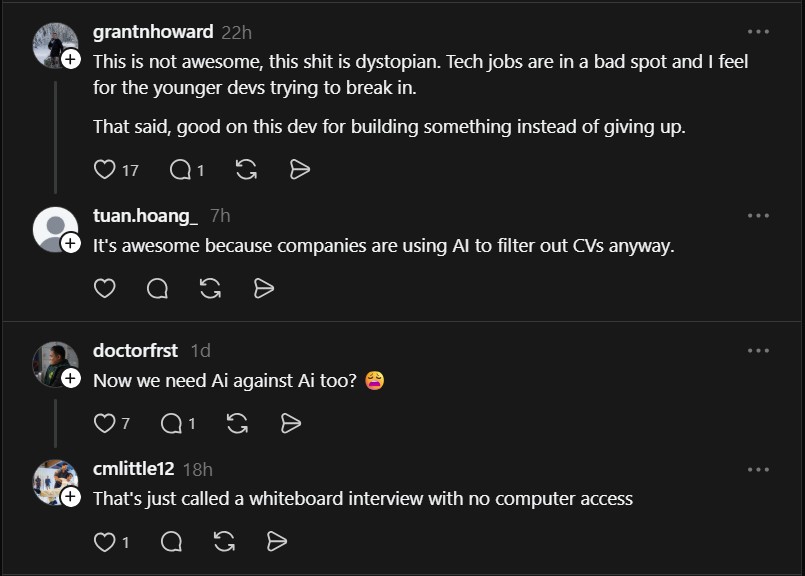 Community discussion about Career-Ops on Threads
Key Features at a Glance
| Feature | Description |
|---|---|
| Company Coverage | 45+ tech companies (Stripe, Anthropic, OpenAI, etc.) |
| CV Rewriting Modes | 14 skill‑matching modes for precise customization |
| ATS Optimization | Playwright‑generated PDFs that pass automated screenings |
| Scoring System | A‑F grading across 10 weighted dimensions |
| Batch Processing | Parallel evaluation of 10+ offers with sub‑agents |
| Portal Support | Greenhouse, Ashby, Lever, custom career pages |
| Dashboard | Terminal‑based real‑time monitoring |
Community Reactions
The project has sparked lively discussion. Here’s what people are saying:
“This is not awesome, this shit is dystopian. Tech jobs are in a bad spot and I feel for the younger devs trying to break in. That said, good on this dev for building something instead of giving up.”
— @grantnhoward
“Nice, everything gets automated. We as people simply are the interface to connect stuff with each other.”
— @justahero
“Yes, this can replace any staffing/contract agency whom takes $25k a head to be the middleman, that may have been negotiable income for the job seeker”
— @vicioustide
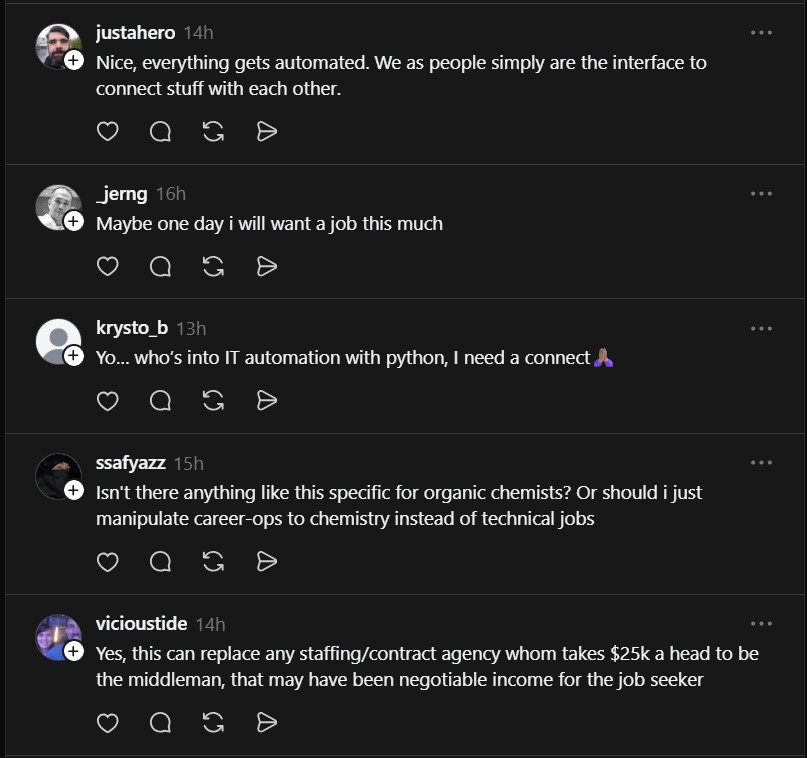 More Threads commentary on the automation vs. job‑market dynamics
Getting Started
Career-Ops is open‑source and available on GitHub. Because it’s built with Claude Code, you can clone the repo, follow the setup instructions, and start running your own automated job‑search pipeline in a matter of minutes.
- Project link: https://github.com/santifer/career-ops
If you’re a technical job seeker tired of manual applications and spreadsheet tracking, Career-Ops might be the command‑center upgrade you’ve been waiting for. It’s a clear example of how AI can be leveraged not just to assist, but to completely systematize a high‑stakes, repetitive process.
This curation is part of Gitafterwork.com, your daily hub for the best trending GitHub repositories. Bookmark us to stay updated on the tools that actually matter—no fluff, just high-impact open source.