


I ran into Claw Code while looking for transparent examples of how production‑grade AI agents are actually built, and what caught my attention was its pedigree. This isn’t a toy implementation, it’s the public Rust implementation of the claw CLI agent harness used in flagship AI products. It runs natively on Bun and uses React with Ink for a beautifully slick terminal UI. As the description puts it: “Want to see exactly how top‑tier developers build flagship AI agents? Look under the hood! A rare look under the hood of a flagship AI product. Worth reading before it disappears.”
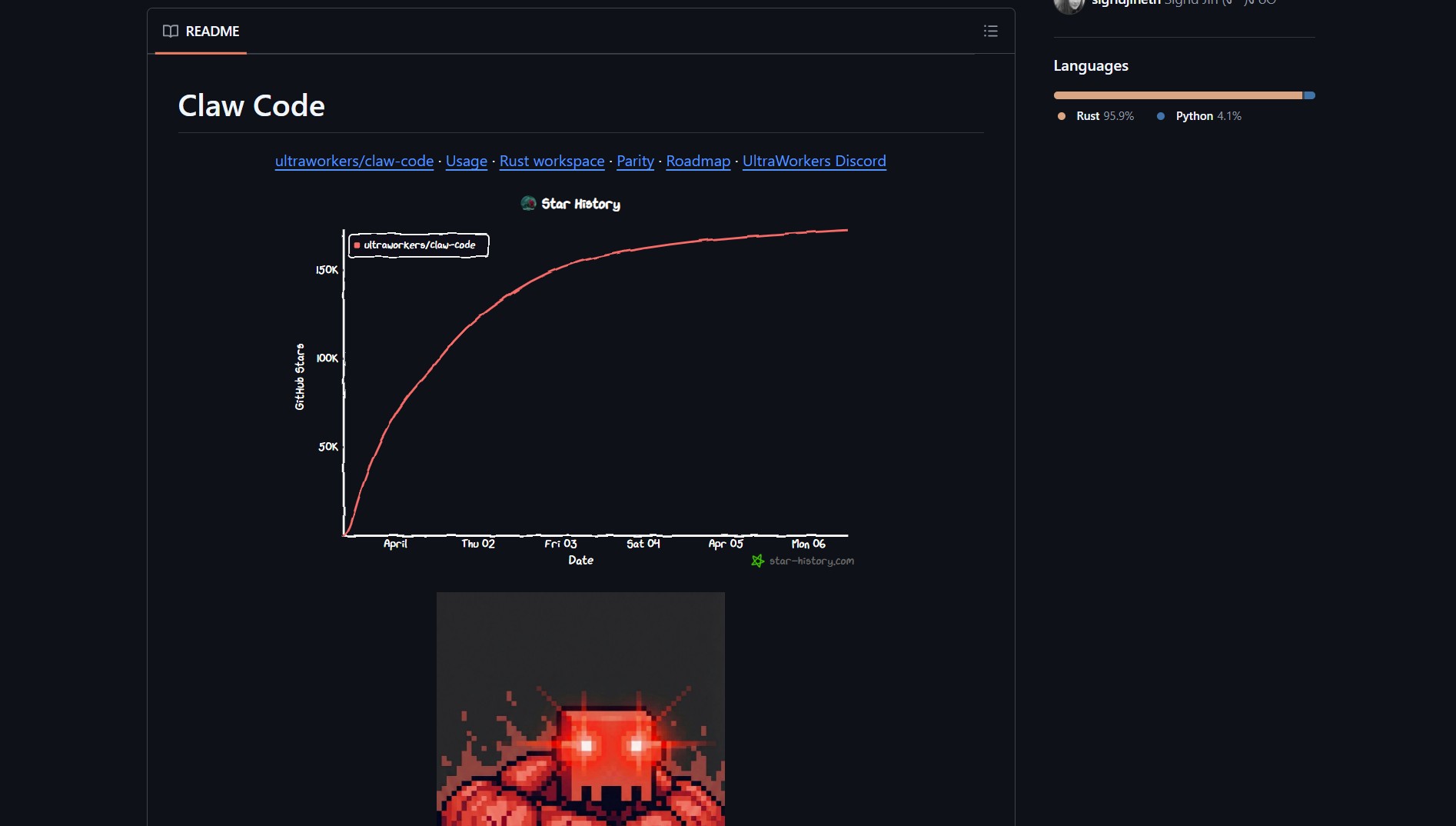 Claw Code GitHub repository homepage
What Is Claw Code?
Claw Code by ultraworkers is for developers who want to study and build advanced AI agent systems. It solves the problem of the lack of transparent, real‑world examples of how production‑grade AI agents are actually implemented. The canonical implementation lives in rust/, and the current source of truth for this repository is ultraworkers/claw-code.
The project isn’t the entire source code for Claude Code, just the CLI wrapper. So you can’t run Claude locally or for free using this code. But as a study resource, it’s a goldmine for seeing how professional AI agents are structured.
Key Starting Points
USAGE.md– Build, auth, CLI, session, and parity‑harness workflowsclaw doctor– Your first health check after buildingrust/README.md– Crate‑level detailsPARITY.md– Current Rust‑port checkpointdocs/container.md– Container‑first workflow
Technical Architecture
Claw Code represents a modern, production‑ready approach to AI agent infrastructure:
| Component | Technology | Purpose |
|---|---|---|
| Runtime | Bun | Native execution environment |
| UI Framework | React with Ink | Terminal‑based user interface |
| Core Language | Rust | Performance‑critical CLI harness |
| Container Support | Docker/Podman | Container‑first workflow |
The architecture emphasizes:
- Performance – Rust provides low‑level control for the CLI harness
- Developer Experience – Bun and React/Ink create a polished terminal UI
- Reproducibility – Container‑first workflow ensures consistent environments
- Health Monitoring – Built‑in
claw doctorfor system diagnostics
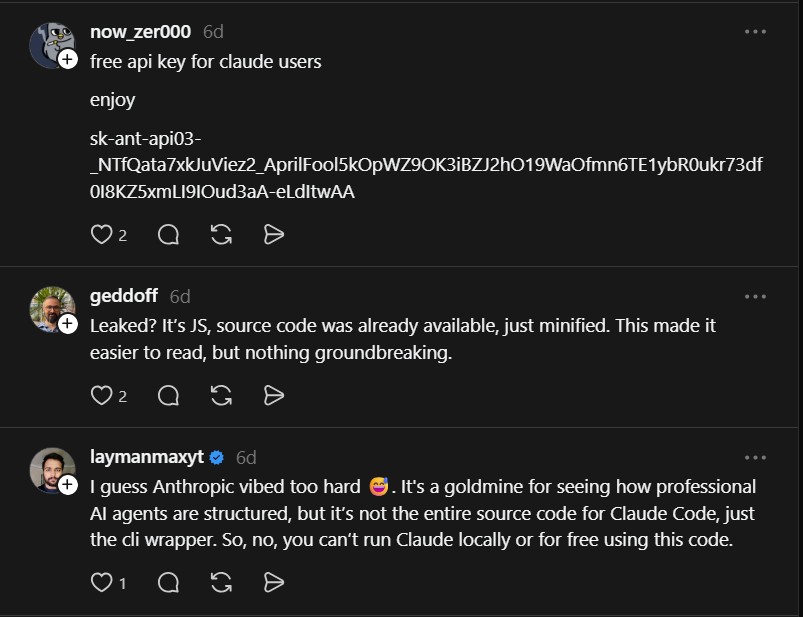 Community discussion about Claw Code’s significance
Community Reactions & Context
The project has generated buzz for its insider view of AI agent architecture:
“I guess Anthropic vibed too hard 😅. It’s a goldmine for seeing how professional AI agents are structured, but it’s not the entire source code for Claude Code, just the cli wrapper. So, no, you can’t run Claude locally or for free using this code.”
— @laymanmaxyt
“I’m among the lucky 70k people that actually fetched it from npm before it was yanked. Probably going to make a plausible git history for all versions leading up to this one as a treat.”
— @dr.highway
The references to npm being “yanked” and the limited window of availability add to the project’s lore. It represents a snapshot of industrial AI agent tooling that’s rarely exposed publicly.
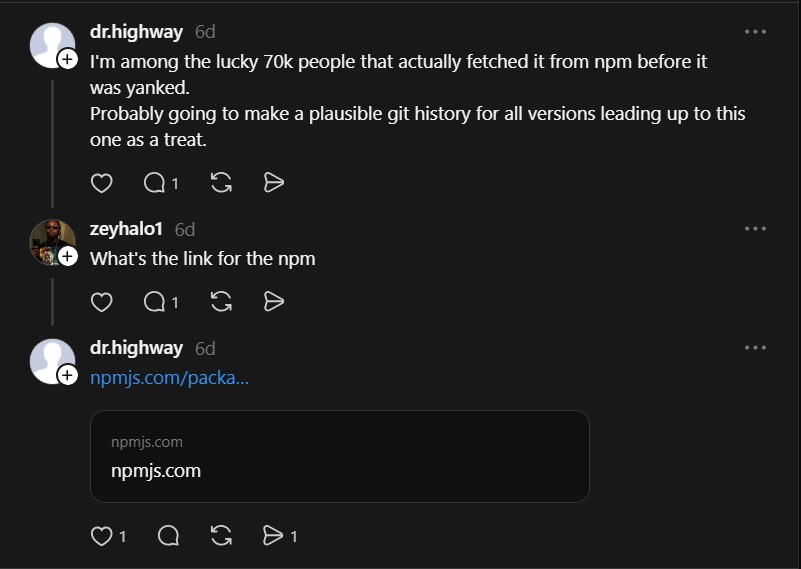 More Threads commentary on the project’s archival value
Getting Started with Claw Code
If you’re a developer interested in AI agent architecture, Claw Code offers a unique learning opportunity:
- Clone the repository:
git clone https://github.com/ultraworkers/claw-code - Review
USAGE.mdfor the comprehensive workflow guide - Run
claw doctorafter building to verify your environment - Study the Rust implementation in the
rust/directory - Experiment with the container workflow documented in
docs/container.md
- Project link: https://github.com/ultraworkers/claw-code
Experimental AI
For a more radical take on AI agent architecture, look at CL1 LLM Encoder, which explores using biological neurons to influence LLM token generation.
While Claw Code won’t let you run a free local Claude instance, it provides something arguably more valuable: a transparent look at how top‑tier AI engineering teams structure their agent infrastructure. For developers building their own agent systems or simply curious about production‑grade AI tooling, it’s a rare educational resource worth examining before it potentially disappears or changes.